Read a book a few months ago by Tom Vanderbilt called traffic that was an academic look at the titular traffic and it showed negative returns on adding lanes.
Can you summarize the gist of it? I keep seeing this claim and it is extremely non-intuitive.
Supposing it’s true, how is it we’ve magically arrived at the optimal number of lanes as of the uttering of the statement?
If it’s a basically linear function where the lowest traffic is near-zero lanes, is there an implication that mass transit would be built in tandem with lane reduction, or does everyone just get more miserable?
Edit: I’ll add that what I’ve heard is that more people choose to drive until the misery-equilibrium is reached. So roads will always be as busy as they are now because they are at their max tolerable level of drivability. That seems plausible for some roads and for some finite number of lanes, but not generally applicable.
You’d be surprised by how widely applicable it is, it works for virtually any road. Small city roads, highways, even residential streets.
There also isn’t a maximum number of lanes for this effect (well, there technically is, but it’s too large to be feasible) because cars are an extremely inefficient way of transportation, so they take up a lot of space.
Roads also become increasingly more expensive with each extra lane added, to the point where it becomes economically impossible to keep adding lanes. You also need to demolish buildings if the road was already too close to them. And the cost of the extra lane isn’t a one off, it also generates a running cost for repairs and inspections.
That money is better spent on making viable alternatives to cars, which actually will help traffic or even fix it.
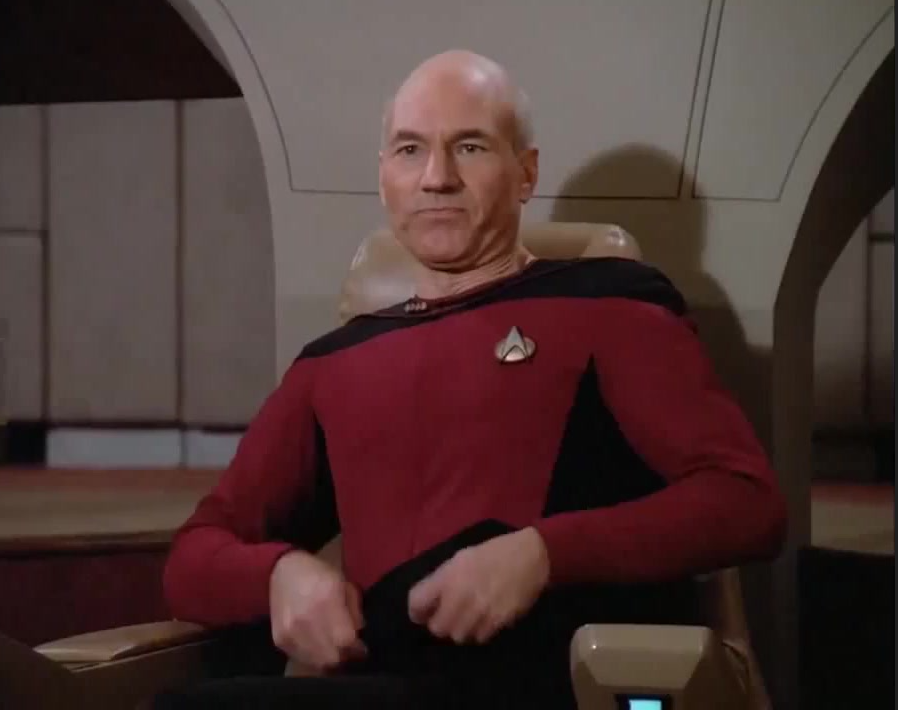


Just one more lane bro! That’ll get rid of the traffic bro!
Read a book a few months ago by Tom Vanderbilt called traffic that was an academic look at the titular traffic and it showed negative returns on adding lanes.
Can you summarize the gist of it? I keep seeing this claim and it is extremely non-intuitive.
Supposing it’s true, how is it we’ve magically arrived at the optimal number of lanes as of the uttering of the statement?
If it’s a basically linear function where the lowest traffic is near-zero lanes, is there an implication that mass transit would be built in tandem with lane reduction, or does everyone just get more miserable?
Edit: I’ll add that what I’ve heard is that more people choose to drive until the misery-equilibrium is reached. So roads will always be as busy as they are now because they are at their max tolerable level of drivability. That seems plausible for some roads and for some finite number of lanes, but not generally applicable.
Tldr
https://youtube.com/shorts/CycZy2WxEu4?is=qoJAgZ44QvUhUcoL
You’d be surprised by how widely applicable it is, it works for virtually any road. Small city roads, highways, even residential streets.
There also isn’t a maximum number of lanes for this effect (well, there technically is, but it’s too large to be feasible) because cars are an extremely inefficient way of transportation, so they take up a lot of space.
Roads also become increasingly more expensive with each extra lane added, to the point where it becomes economically impossible to keep adding lanes. You also need to demolish buildings if the road was already too close to them. And the cost of the extra lane isn’t a one off, it also generates a running cost for repairs and inspections.
That money is better spent on making viable alternatives to cars, which actually will help traffic or even fix it.