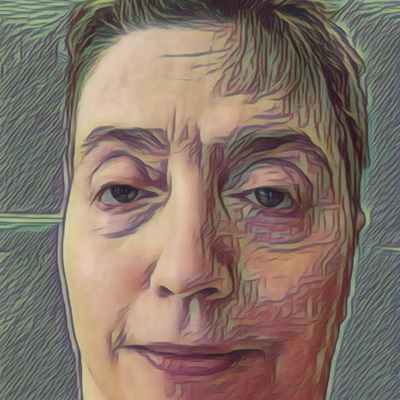
Researchers say the findings may also someday help police investigators conjure up the faces of suspects from their DNA samples. But that potential application wades into murky ethical territory
There it is
Yeah I’m sure it will never make a mistake or be relied upon as the gospel of jesus like you see with, oh idk every single piece of technology used by police provided it aligns with their existing bias at the moment
Find a dozen people who look like suspect. Do DNA analysis on dozen “doppelgangers”. Take DNA from “doppelganger” that is the closest match, present to court using “expert” witness.
Bad news for people that look like famous serial killers.
So that’s why I want to make people lamp shades so bad? /s
This kinda feels like a “duh.” Or a “Well, makes sense”
Genetics, I can understand. But lifestyles? How?
If different people with similar visual characteristics have similar behavioral characteristics, doesn’t that imply that perhaps we can judge a book by its cover?
Yes but how much?
I’ve wondered this about people who act the same. They also tend to have some of the same facial expressions and mannerisms.
Maybe like our brains have certain tempaltes of personalities that we alter along the way. A starter personality of sorts.
I mean there’s this town in rural [state my family had a farm in but now we don’t hallelujah farm work is hard] that everyone looks like me because, well, go back far enough and all 500 of them and me are related. First time I went to the old farm it was frightening. Like walking into a clone factory.
There are only so many permutations of topological entanglement!
7 colors × 6 directions = 42 types of individual entanglement within the topological matrix we are not IN but rather ARE
Strange, almost like phenotype is dependent on genotype?
It seems this includes genes that don’t play a direct role in the formation of facial features.
Yes, but it’s not necessarily the only way that would work. So this is very neat!
It is still interesting. I wonder if epigenetics plays a larger role, or if face look is tied to other random traits.
The article says epigenetics don’t play much of a role in it, it’s all genetics.
How similar is DNA from convergent evolution animals?
I mean, my uncle (who spent very little time with his bio father) has all the same mannerisms as him. As do I and my mother and one of my brothers. Some of it is that we inherited similar skeletal structure so our posture is similar. Some of it, I dunno.
well, at some point, everything is a crab.
so I would assume pretty similar.
great question though.
DNA has a limited number of genes. Considering the enormous amount of functions they need to encode, the number of genes for each function becomes relatively small. 8 billion people and thousands of generations, we’re bound to have duplicates.
Yes, but the article says that certain combinations occur more often that if it was random. People with similar faces tend to have similar genes that are nor related to facial features.
I would say it’s even smaller in number. Because some combinations would not work and might kill you.
That’s not exactly true. A lot of DNA is redundant, and a lot of DNA is dead code that doesn’t do anything.
Since you’ve only been told that you’re wrong, and I was also under the impression that there was a lot of junk DNA in our genome, I did a little digging and found this article that explains the progression of our understanding pretty well: https://www.sciencenewstoday.org/human-dna-98-of-your-genetic-code-is-junk-or-is-it
The TLDR is that the original junk DNA hypothesis is based on the fact that only ~2% of DNA is actually used in mapping out protein-construction. That was generally supported by the science from the 70’s to the early 2000’s. What scientists have found in the decades since then is that a lot of what DNA does involves regulating activity in the cell and responding to changing circumstances.
Is it really dead code, or we haven’t found out what it does?
That’s a very outdated idea.
I always wondered about this in terms of I have known some types of folks that look similar and actually often have similar social traits and this includes me to.
Or maybe we’re living in a simulation and whatever is generating it only has a finite number of characters. 😲
@RegularJoe I’m curious about how this might work across ethnicities. I can’t point to a photo, but several times, I’ve noticed people from other continents who could easily be someone I know here, except they’re African, or Asian, when the person I know is white, just for example. Under the expected differences in hair, eyes, etc, the basic facial structure is the same. A DNA match seems less likely in these cases.
I don’t have a great answer other than of the 32 studied, these were their stratification:
Related to population stratification, among the 16 look-alike pairs, 13 were of European ancestry, 1 Hispanic, 1 East Asian, and 1 Central-South Asian.
Source: https://www.cell.com/cell-reports/fulltext/S2211-1247(22)01075-0
But whether people who look close enough to perform as another, such as the “Chinese Obama” (Xiao Jiguo) I can’t say.
Then there’s Indonesia’s former president, Joko Widodo:
https://nextshark.com/people-love-indonesias-president-looks-like-barack-obama
It would be interesting to get the researchers to analyze their DNA.
@RegularJoe thank you! This is quite interesting. I’d forgotten about the celebrity look-alikes you mentioned. I’m not surprised the studies aren’t there.
I don’t think it’s about a DNA match. Those people you mention could share more DNA than the rest of us, which could account for their similarities, but their DNA will never “match” anyone else’s.
All humans are within 23 degrees of being cousins. The thing that surprised me most is that sub Saharan Africans are the most diverse genetically speaking.
Why didn’t they give FB-007 shirts?
Any qualified 007 could report to Q for cutting edge clothing and gear?
It is, after all, a smallish planet. Bound to be some duplication.
Nice to see research shared like this, thanks. I’ve always been fascinated by facial similarities. The other thing I often look at, especially when pronounced, is the difference in the two hemispheres of the face.
Oh good, phrenology is back.